

Abruzzo vs Tuscany: Which Italian Region Should You Visit?
March, 25th 2026
This is the question we get asked most often. Two regions, two completely different Italias. There is no single correct answer, but there is a correct answer for you. Here is our honest take.
The Numbers First
Before we get into the details, the data tells a story worth knowing.
Tuscany is one of the most visited regions in Italy, consistently ranking in the top three for international arrivals alongside Veneto and Lombardy, generating approximately 2.7 billion euros in cultural tourism spending annually (The Data Appeal Company, Cultural Tourism in Italy, 2024). Florence alone received over 13 million visitors in 2023. In peak summer, the queues outside the Uffizi can stretch for hours.
Abruzzo tells a very different story. Despite being right next door to Rome — less than two hours by car — fewer than 3% of foreign visitors to Italy make it here (Rome Business School, The Business of Tourism in Italy, 2024). And yet, Abruzzo is officially Italy’s number one destination for green tourism — ahead of every other region in the country (Rome Business School, 2024). The gap between what Abruzzo offers and how little it is known is, frankly, extraordinary.
In 2023, Abruzzo recorded record visitor numbers — part of a broader trend of travellers seeking authentic, less crowded Italian experiences (THRENDS, Italian Regions Tourism Rankings, 2023). The word is getting out. Slowly.
Geography — More Similar Than You Think
Both Tuscany and Abruzzo sit in central Italy. Both have mountains, rolling hills, medieval villages and a coastline. The similarities end there.
Tuscany faces the Tyrrhenian Sea to the west and the Apennines to the east. Its landscape — immortalised in a thousand postcards — is one of the most recognisable in the world. The Val d’Orcia, the cypress trees, the vineyard estates. It is extraordinarily beautiful.
Abruzzo faces the Adriatic Sea to the east and the Apennines to the west — a mirror image in geography, a completely different world in atmosphere. Where Tuscany has been shaped by centuries of tourism, Abruzzo has been shaped by centuries of isolation. That isolation is its greatest gift. The landscapes here — the Gran Sasso plateau, the Maiella massif, the Costa dei Trabocchi — are as dramatic as anything in Italy. Most of the world has simply not yet noticed.
The Villages
This is where the comparison becomes most interesting — and most revealing.
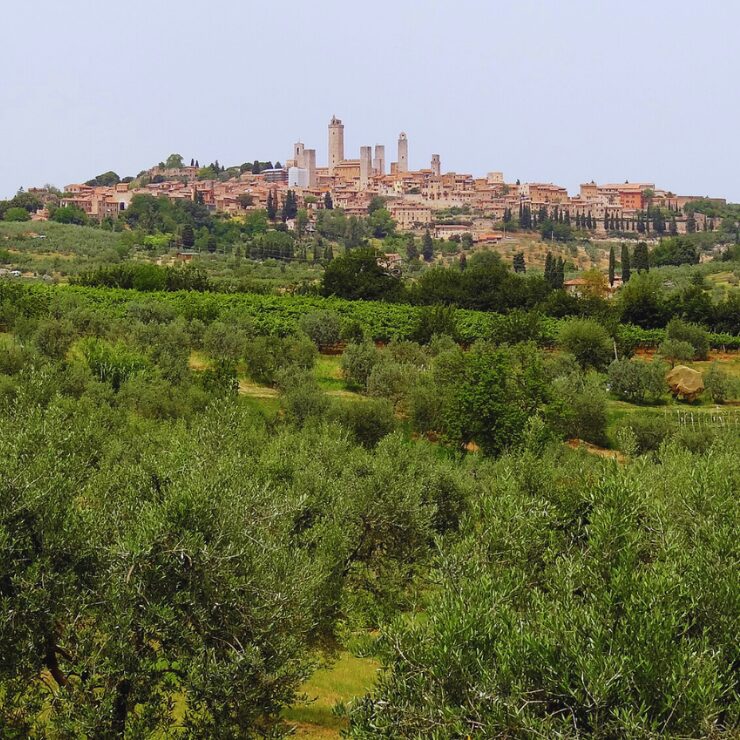
Tuscany has some of the most famous medieval villages in Italy. San Gimignano, Montepulciano, Pienza, Volterra — extraordinary places with extraordinary histories. They are also, in peak season, extraordinarily crowded. San Gimignano receives approximately 3 million visitors per year for a town of 7,000 inhabitants. The streets are lined with tour groups, souvenir shops and restaurants designed for people who are passing through.
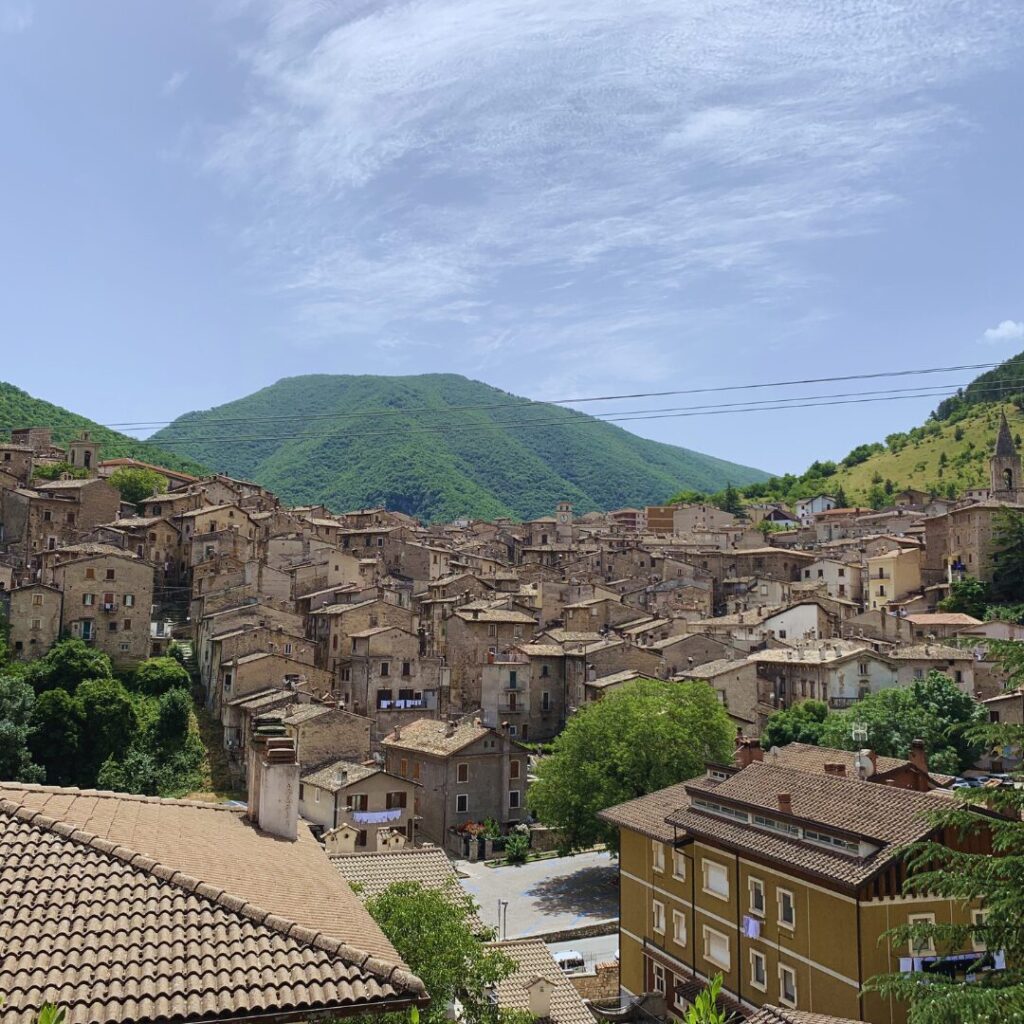
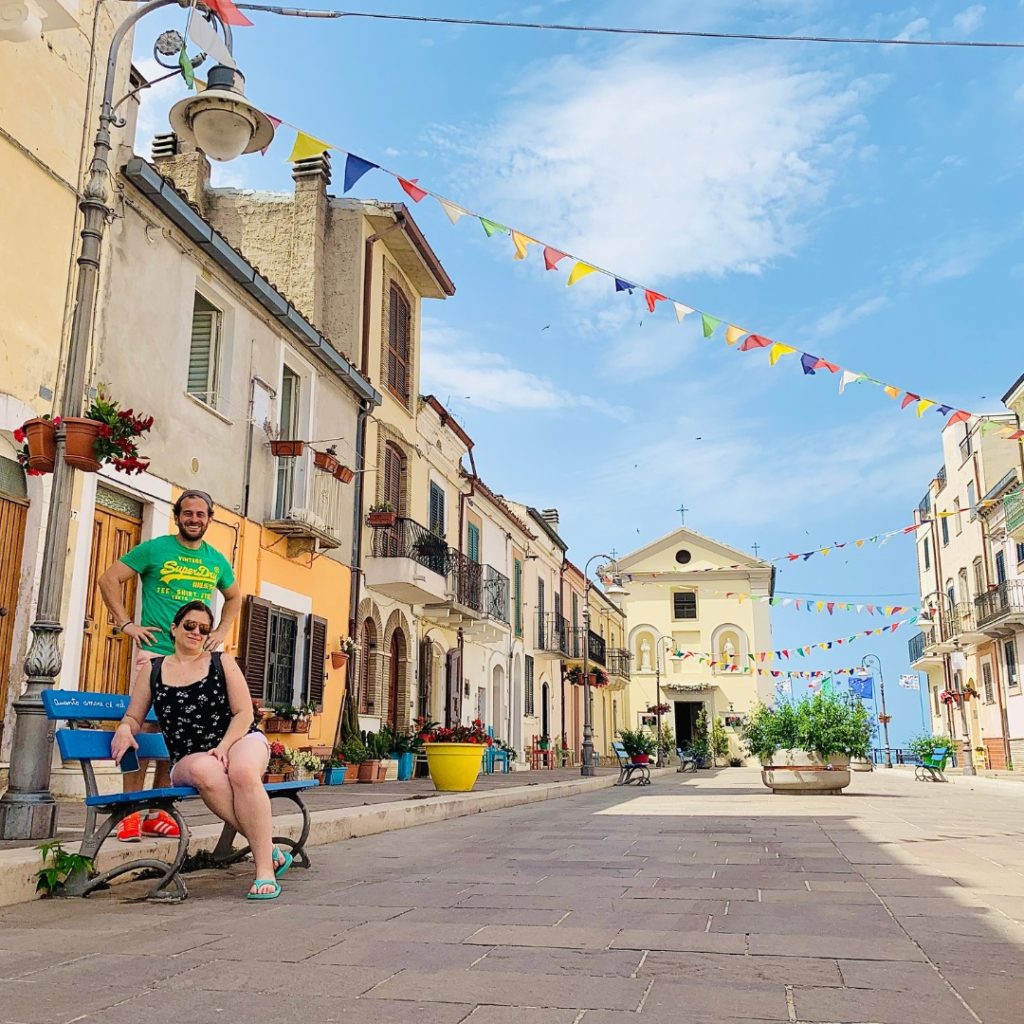
Abruzzo has 27 villages certified by I Borghi Più Belli d’Italia — among the most beautiful in the entire country. Scanno, Santo Stefano di Sessanio, Rocca Calascio, Civitella del Tronto, Guardiagrele, Pretoro. Each one different. Each one worth the detour. And in most of them, in most seasons, you will share the streets with locals — not tour buses.
We have walked through Pennapiedimonte on a Sunday morning and seen nobody. We have stood at the top of Civitella del Tronto and had the fortress entirely to ourselves. We have driven into villages near Pescara that do not appear in any guidebook and found trattorias where the menu was written on a blackboard and changed daily.
Tuscany’s villages are beautiful. Abruzzo’s villages are alive.
First photo – San Gimignano. Photo credit: Wikimedia Commons, CC BY-SA 4.0
Second photo – Scanno.
Food and Wine
Both regions take food and wine extraordinarily seriously. The comparison here is genuinely close — and that is saying something about Abruzzo, because Tuscany is one of the great food regions of the world.
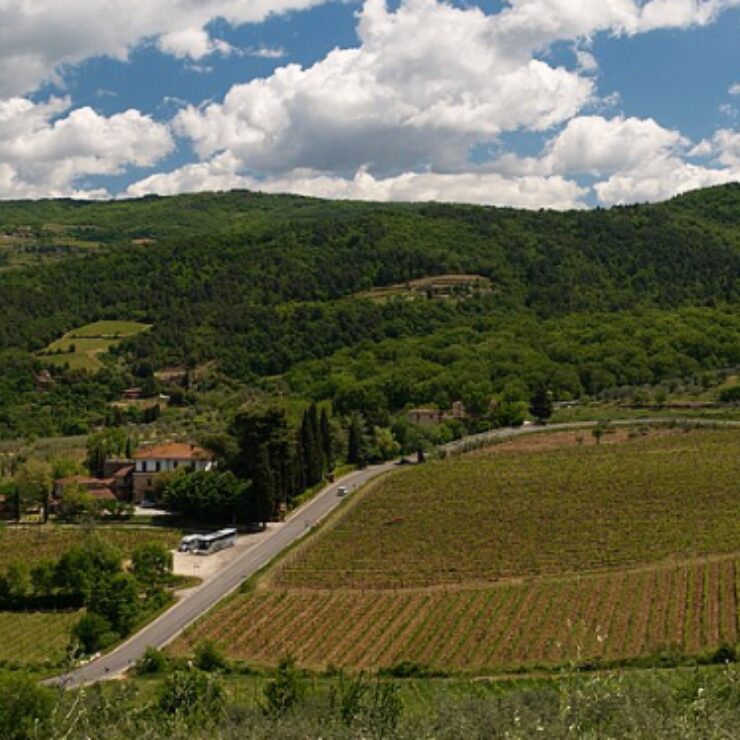
Tuscany gives you bistecca fiorentina, pappardelle al cinghiale, ribollita, pecorino di Pienza and Chianti Classico. The wine estates of the Chianti region are world famous — beautifully run, beautifully presented and priced accordingly.
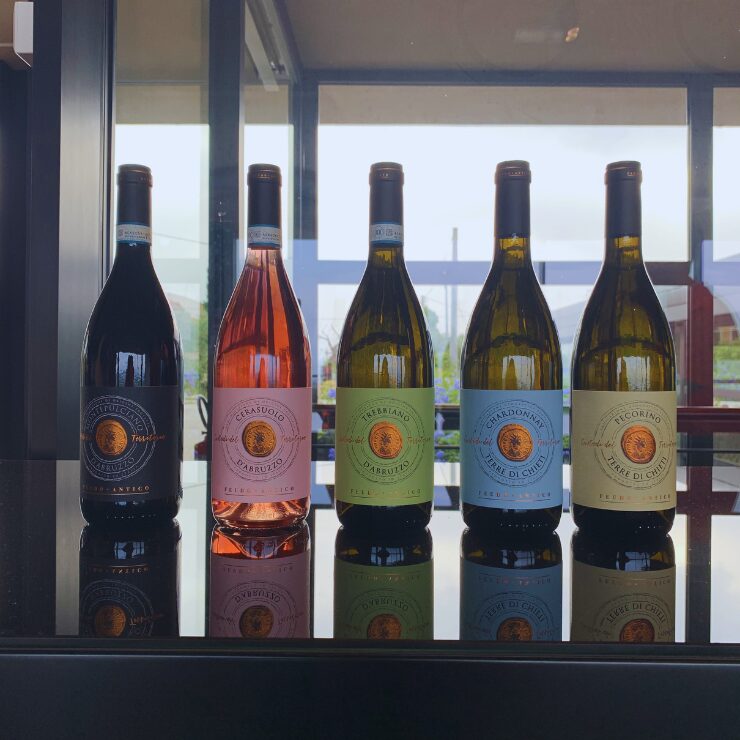
Abruzzo gives you arrosticini — lamb skewers grilled over a furnacella that are impossible to stop eating. Spaghetti alla chitarra with a ragu that takes hours. Fresh Adriatic seafood eaten on a trabocco over the sea — one of the most extraordinary dining experiences in Italy. And Montepulciano d’Abruzzo — a wine that holds its own against anything Tuscany produces, at a fraction of the price.
We have tasted Montepulciano d’Abruzzo poured straight from terracotta amphoras at Feudo Antico in Tollo. We have sat in the medieval stone dining room of La Vineria di Salnitro near Guardiagrele and eaten food that we are still thinking about years later. And we have had 11 courses of fresh Adriatic seafood at sunset, suspended over the sea on wooden planks that have been there since 1887.
Tuscany feeds you beautifully. Abruzzo feeds your soul.
First Photo – View of rolling Chianti vineyard – Photo credit: Wikimedia Commons, CC BY-SA 2.0
Second photo – A wine selection of Abruzzo – Feudo Antico
The Coastline
This is a comparison that rarely gets made — and it should.
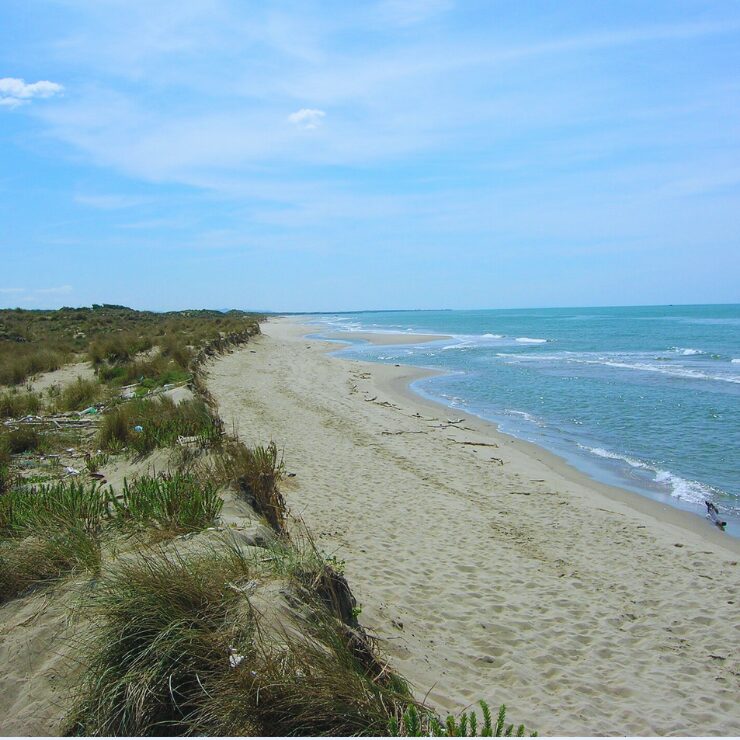
Tuscany has a coastline on the Tyrrhenian Sea, running from Massa Carrara in the north to the Argentario promontory in the south. Parts of it are beautiful — particularly the Maremma coast and the island of Elba. But much of the Tuscan coast is heavily developed, dominated by beach clubs and summer resorts that fill to capacity in July and August.
Abruzzo’s Adriatic coastline stretches for over 130 kilometres across three provinces — Teramo, Pescara and Chieti — and offers a variety of coastal experiences that is genuinely remarkable for a single region.
In Teramo province you find long sandy beaches — Alba Adriatica, Giulianova, Roseto degli Abruzzi — popular with Italian families and awarded the Blue Flag for cleanliness. In Pescara province the coast is more urban but still accessible. And in Chieti province — particularly along the Costa dei Trabocchi — you find some of the most extraordinary coastal scenery in Italy.
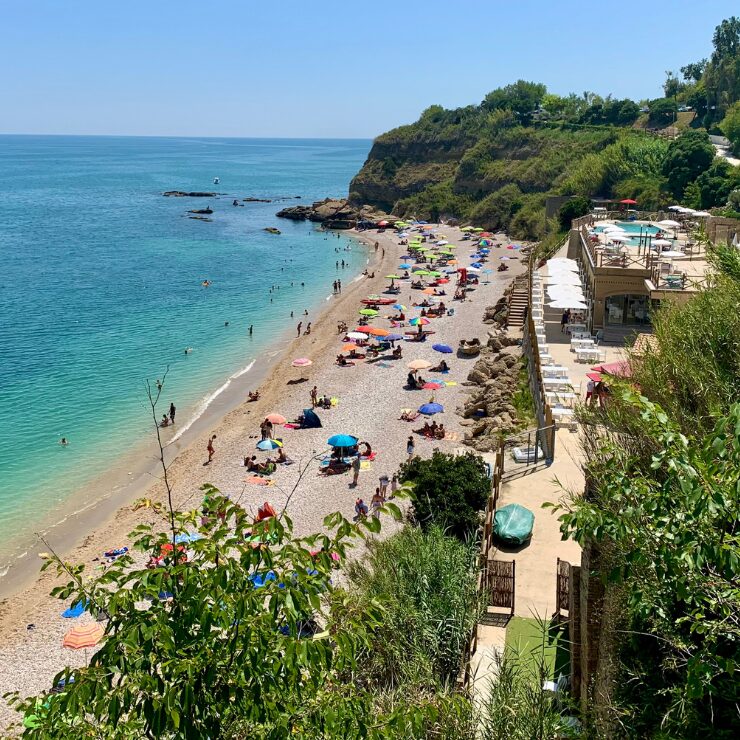
The beaches of Abruzzo range from wide sandy stretches to dramatic pebble coves, from fully equipped lidos to completely wild nature reserves. Ripari di Giobbe in Ortona is a hidden rocky cove of extraordinary beauty. Calata Turchino on the Via Verde sits directly below the old coastal railway line — you arrive by bicycle with the sea beside you the entire way. And Punta Aderci near Vasto is a protected nature reserve where the dunes, the sea and the surrounding hills create a landscape unlike anywhere else on the Adriatic.
The water is clean. The beaches are varied. And in September — our favourite time to visit — the sea is warm, the crowds have gone and the Costa dei Trabocchi is at its most magical.
Tuscany has a coastline. Abruzzo has a coast worth building a holiday around.
First photo – Spiaggia del Gombo. Photo credit: Wikimedia Commons, CC BY-SA 3.0
Second photo – Spiaggia Ripari di Giobbe.
Nature and the Outdoors
This is where Abruzzo wins — and it is not even close.
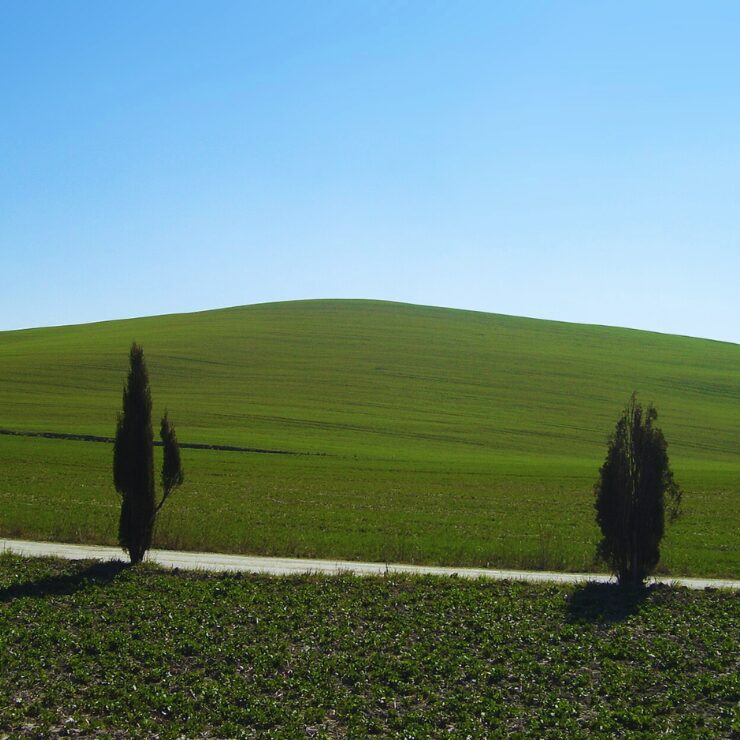
Tuscany has beautiful landscapes. The Val d’Orcia is a UNESCO World Heritage Site for good reason. But Tuscany is a cultivated landscape — shaped over centuries by human hands. Its nature is picturesque. Abruzzo’s nature is wild.
Abruzzo has three national parks — the Gran Sasso e Monti della Laga, the Maiella and the Abruzzo, Lazio e Molise National Park — covering more than a third of its territory. It is officially the greenest region in Europe. Wolves and Marsican brown bears still roam its forests. The Apennine chamois, once nearly extinct, was saved here.
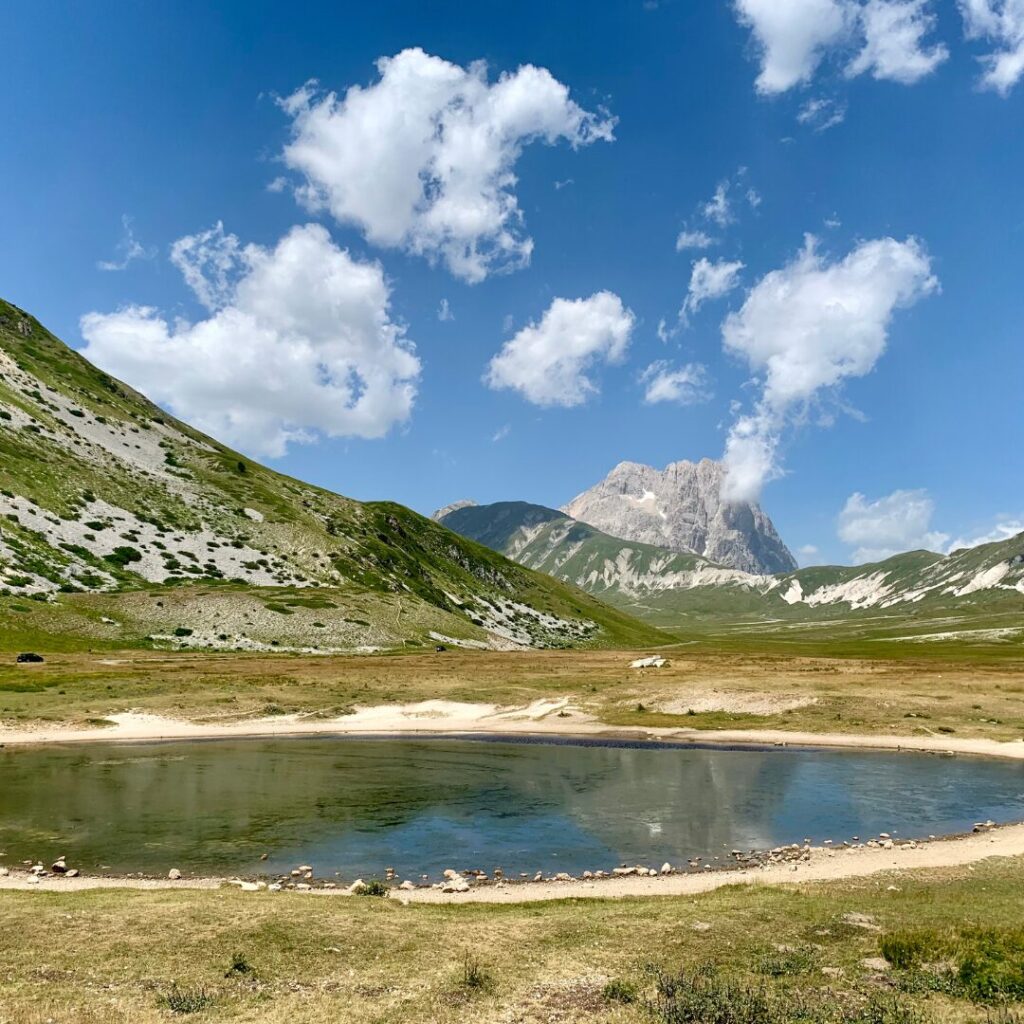
La Maiella — the mother mountain of Abruzzo — is a UNESCO Global Geopark, home to the richest flora in Europe and over 500 kilometres of marked trails. Campo Imperatore, the vast plateau of the Gran Sasso at 1,800 metres above sea level, has been called the Little Tibet of Italy. The Tirino River is considered the cleanest river in Italy.
For hiking, cycling, kayaking, horse riding and conscious travel, Abruzzo is in a different league entirely.
First photo – Rolling hills and cypress trees of Val d’Orcia UNESCO landscape – Photo credit: Wikimedia Commons, CC BY-SA 2.5.
Second photo- Campo Imperatore – Gran Sasso.
Cost
This comparison requires very little analysis.
A mid-range hotel in Florence or Siena in peak season will cost between €150 and €300 per night. A wine tasting at a Chianti estate starts at €30 to €50 per person. Dinner at a good restaurant in San Gimignano will rarely leave you with change from €50 per person.
In Abruzzo, a charming agriturismo in the hills costs between €60 and €120 per night — often including breakfast. The fixed menu at Trabocco Punta Cavalluccio — 11 courses of fresh Adriatic seafood — is €60 per person. A bottle of excellent Montepulciano d’Abruzzo in a restaurant costs €15 to €25. A plate of arrosticini costs under €10.
As one regular Abruzzo visitor put it on TripAdvisor: “It is less expensive and less crowded and less overwhelming.” That is, in three words, the Abruzzo proposition.
Crowds
In July and August, Florence receives approximately 500,000 visitors per month. The Uffizi sells over 1.5 million tickets per year. Parking in the Chianti region in summer requires planning days in advance.
In July and August in Abruzzo, the beaches of the Costa dei Trabocchi are busy — mostly with Italian families from Rome and the surrounding regions. The villages of the interior are quiet. The national parks are serene. The trabocco restaurants are booked — but bookable.
If you visit Abruzzo in September, as we have done multiple times, you will find a region that feels entirely unhurried. The sea is warm, the crowds have gone and the food and wine are at their best.
How to Get There
Tuscany is extremely well connected. Florence has an international airport with flights from across Europe. High-speed trains connect Florence to Rome in 1h30 and to Milan in 2 hours. Getting around by train is genuinely easy.
Abruzzo requires slightly more planning — but less than most people think. Pescara Airport has direct flights from London Stansted with Ryanair, taking approximately 2.5 hours. From Rome Fiumicino or Ciampino, Abruzzo is reachable by car in approximately 1h30 to 2 hours via the A24 and A25 motorways. A car is essential for exploring the region properly — but as we have said before, driving through Abruzzo is an experience in itself.
For everything you need to plan your trip, our Abruzzo Essentials guide covers it all.

Our Honest Verdict
We are going to be straight with you: we are not objective. We have roots in Abruzzo. We have spent years writing about it, exploring it and falling in love with it again every time we go back. This blog exists because of Abruzzo.
What follows is not a comparison from someone who has spent equal time in both regions. It is an honest assessment based on what we know about Abruzzo firsthand — and what we know about Tuscany from research, data and the experiences of countless travellers who have done both.
Choose Tuscany if you want world-class Renaissance art and architecture. Florence, Siena and the Uffizi are genuinely irreplaceable. If the Medici, Michelangelo and Botticelli are on your list, Tuscany is non-negotiable. The wine estates of the Chianti are also extraordinary — beautifully produced and presented in a way that Abruzzo does not yet match. And if you are travelling without a car and want maximum flexibility, Tuscany’s train connections are hard to beat.
Choose Abruzzo if you want authentic Italy — the kind that has not been packaged for international tourism. If you want medieval villages where you share the streets with locals rather than tour groups. If you want nature that is genuinely wild. If you want food and wine that is extraordinary and affordable. If you want to swim in the cleanest water on the Adriatic coast, eat dinner over the sea on a 19th century wooden platform and drive through a national park where wolves still roam.
And if you want to come home and tell people about a place they have never heard of — that will make them immediately want to go.
The honest truth: Tuscany is one of the great travel destinations in the world and it deserves its reputation. But for travellers who have already done the obvious Italy — or who are simply tired of the obvious — Abruzzo is the answer. It is, quite literally, the city next door.
FAQ
Our Honest Verdict
It depends entirely on what you are looking for. Tuscany offers world-class art cities, famous wine estates and excellent train connections. Abruzzo offers authentic medieval villages without the crowds, three national parks, extraordinary food and wine at lower prices and a coastline that most foreign visitors have never seen. For travellers seeking authenticity and value, Abruzzo is the better choice.
Is Abruzzo cheaper than Tuscany?
Significantly. Accommodation, food, wine and activities in Abruzzo cost substantially less than equivalent experiences in Tuscany. A full tasting menu at a trabocco restaurant costs €60 per person. A mid-range hotel in the Abruzzo hills costs €60 to €120 per night including breakfast. The quality is comparable — the price is not.
Is Abruzzo as beautiful as Tuscany?
In different ways, yes. Tuscany has the Val d’Orcia, the cypress trees and the Chianti vineyard estates — a cultivated, painterly landscape. Abruzzo has the Gran Sasso, La Maiella, the Costa dei Trabocchi and 27 certified medieval villages — a wilder, more dramatic beauty. Both are extraordinary. Most people who visit Abruzzo say they wish they had come sooner.
Can you visit both Tuscany and Abruzzo in one trip?
Yes — and it makes for an extraordinary contrast. Florence or Siena for the art and the Chianti, then Abruzzo for the mountains, the villages and the coast. The two regions are approximately 4 to 5 hours apart by car. A two-week itinerary combining both would give you a complete picture of central Italy.
Which is better for families — Tuscany or Abruzzo?
Both work well for families. Tuscany offers excellent infrastructure and easy logistics. Abruzzo offers beaches, national parks, medieval villages and outdoor activities at lower prices — and the lack of mass tourism means a more relaxed, genuine experience for children and adults alike.
Practical Information
Getting to Tuscany: Florence Airport or high-speed train from Rome (1h30) or Milan (2h). Getting to Abruzzo: Pescara Airport with direct flights from London Stansted (Ryanair, approx. 2h30) or by car from Rome (approx. 1h30 to 2h via A24/A25).
Read more: Abruzzo Essentials · Best Beaches in Abruzzo · Most Beautiful Villages in Abruzzo · Dining in a Trabocco · Is La Maiella Worth Visiting? · Glamping in Abruzzo